(Father: Frank Arthur Pattison 1882-1958)
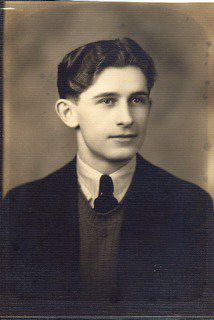
(Mother: Ida A Siebecker 1884-1936)
(Spouse: Evelyn Carol Betts 1922-2002)
Carroll William Rollins Pattison1 was born October 9, 1914, in Lewistown, Fergus County, MT. He was the fourth2 of five children born to Frank Arthur Pattison and Ida (Siebecker).
His story in his own words.
TWO YEARS OLD3: I started ice skating. I lived a half-block from the city park. We had ice skating during the winter months and swimming in the summer.
FOUR YEARS OLD4: This is the first Christmas I can remember. There were five children. I had two older brothers, an older sister, and a younger sister. We all went to bed early. Dad had gone to the forest to get our tree while we slept. Dad brought the tree in and Mom decorated it with popcorn and cranberries. Candles were added and presents were put under the tree. Since Shirley was so young, she got to ride on Marion’s shoulders. Then I followed, then Edith, then my oldest brother Art. When I got down the stairs, there stood the tree, all decorated and presents under the tree. I can remember getting a small wood wagon filled with wood blocks, with letters and numbers painted on them. They helped me learn to count and learn the alphabet. I also received a Hershey bar and some almonds and Brazil nuts. They were in their shells, so we had to crack them before we could eat them. This is the only Christmas I can remember at home in Montana.
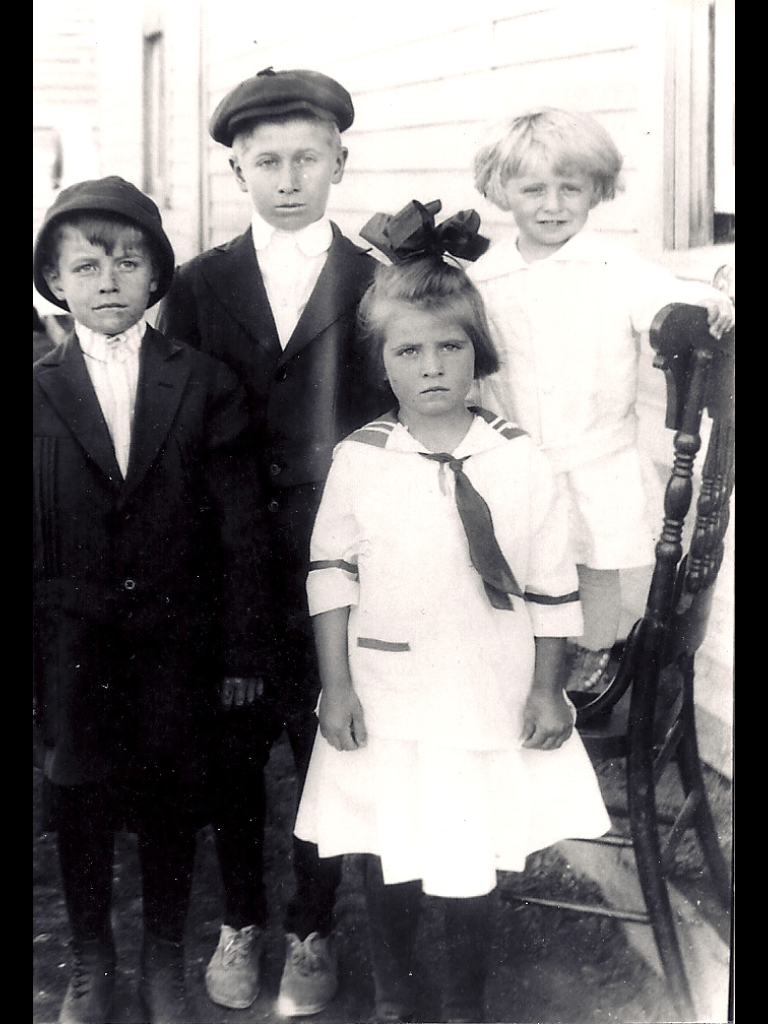
SIX YEARS OLD5: I spent the summer at Prybles Ranch. I was to get ten cents a day and my room and board. I never saw the ten cents. Maybe they gave it to my mom.
SEVEN YEARS OLD6: I would get the milk cows for Mr. Day. I loved to ride his horse, so I would get Star and ride to the pasture and bring the cows back to the barn. Earl Day asked if I would like to help him and deliver the milk. Then, one Saturday he wanted to go to a movie. He asked his dad if I could deliver the milk. When he found out I knew the routes, the job was mine. They gave me a quart of milk to take home. As time went on, Mr. Day asked me to stay for supper. I could do more work if I didn’t have to go home for supper. Then one night he told me I ate too much. My dad got me the job of putting clay pigeons on the trap. They practiced their bird shooting.
NINE OR TEN YEARS OLD7: I got the job at the country club, keeping the weeds down on the fairways. Mr. Day had sheep. We kept them in a pen at night and the next morning I would let them out and herd them to the fairways. Then, late afternoon I would herd them back to the coral. Then I would get the cows and herd them back to the barn for milking. For this, I received $150.00 for the summer. My horse Star had a colt. I had lots of fun with the colt. When the colt laid down, I would use its neck for a pillow, where I took my nap. You can see, I had a really hard job. Sometimes Mr. Day would drive his Chandler Touring car to deliver the milk. We took out the back seat cushions and put in the boxes of milk. I would ride on the running board, grab a quart of milk, and deliver it to the house. I had a pointer bird dog. He would ride on the hood of the car in front of the windshield. One time he saw a cat and off he went to chase the cat. When he hit the pavement, he went head over tea kettle. By that time the cat was up the tree. Other times I would deliver milk in a cart built like a chariot. The horse’s name was Nellie. One time, while I was harnessing her, she reached back and bit me on my elbow. She got to know the routes as well as I did. One time, two of my friends went with me. We made a non-stop run. Several times all of us would be making a delivery and Nellie would just keep trotting along the route. One day no one showed up to milk the eighteen cows. I thought someone would show up to help. No one did. I milked eighteen cows by hand. Mr. Day bottled the milk and then I delivered it. It was 2:00a.m. when I got home. The next day I went to school, but not too wide awake. Gorden Burt and I made our own musical instruments. With a kazoo, rubber hose, and funnels, we made our own brand of music.
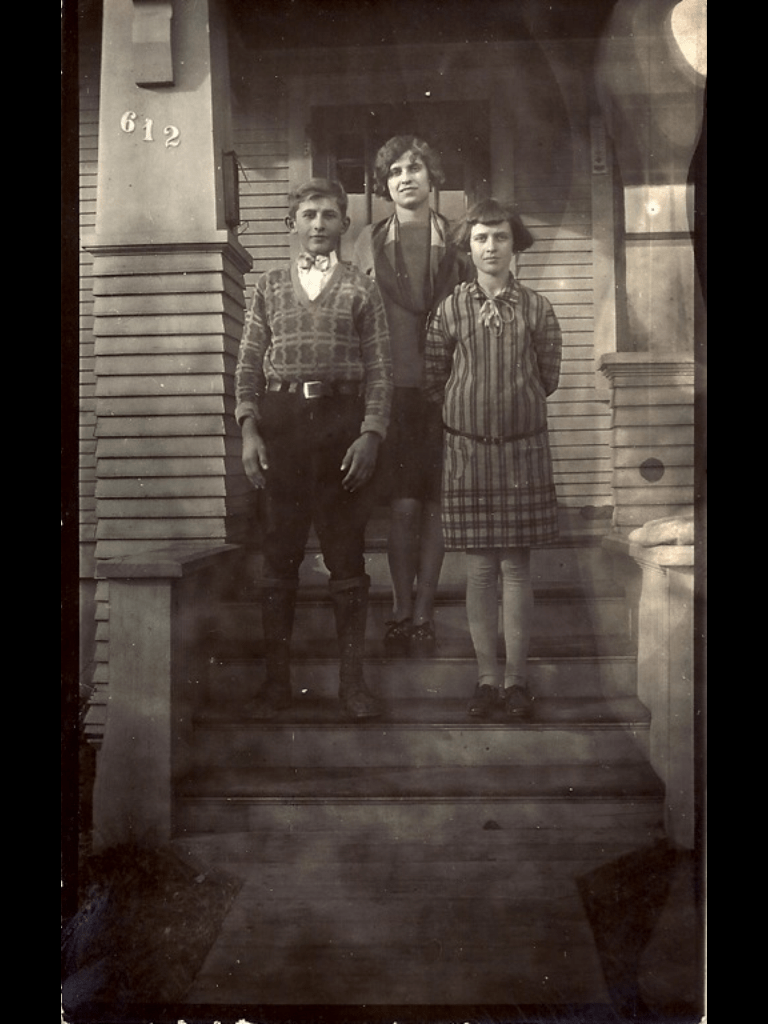
THIRTEEN YEARS OLD8: My parents divorced and Edith, Shirley, and I went to Wisconsin to live with our mother’s relatives. We were there for about six or eight months. Then we returned to Montana. We were at the Billings Fairgrounds, where my mother worked, and one day the sheriff picked us up. The next thing I remember, I was working on a ranch East of Lewistown.

Next, I went to work at McCollum’s ranch, near Lewistown.
We moved to Tacoma to live with our dad. I went to school at Lincoln High. After school, I sold ice at Pacific Refrigeration. when I graduated, I worked full time making ice and working in the warehouse. A year or so later they promoted me to engineer. I was the youngest engineer. When they built a quick freeze plant in Kent WA, I was transferred to Kent. When the harvest season was over I was transferred to Portland.
19369: When I started skating at Redondo Skating Arena, I walked up the stairs to the rink. Selling the tickets was the cutest girl. Since she was only thirteen and I was twenty-one, I had to wait for her to grow up. I didn’t wait very long. We became engaged when Evie (Evelyn Carol Betts) was fifteen and married when Evie was seventeen. Carole Jeanette arrived two days before our first anniversary, March 3, 1941. Five years later to the day, Barbara Lauree was born on March 3, 1946. On October 4, 1949, Mike Allen was born and on March 17, 1954, Larry Weston was born. We had our two girls and two boys. Each had a brother and a sister.
~~~~~
1951:10 We moved to Spokane and started Pattison’s Rollercade. After a lot of remodeling, we made Pattison’s North Division Rollercade into one of the best. We operated it for 23 years.
1972:11 Evie always wanted to come back to Redondo (WA). We sold the rink to our son-in-law and daughter, Ben and Barbara Winkler.
Some of the memories I have growing up in Lewistown:12
-Having the city park so close I could skate in the winter and swim in the summer.
-Having Spring Creek so close I could go fishing.
-Having the Judith Mountains so close so we could hike to the mountains and stay overnight.
-Going out to Cottonwood to attend picnics on Sunday afternoons. Going to Belt Mountains to look for silver and lead nuggets.
-Going to the Myrtle and Judith theaters on Saturday afternoons. Seems like they always had a Tom Mix or Hoot Gibson western movie or Lon Chaney in Phantom of the Opera.
-Seeing the two ladies driving down Fifth Avenue in their electric car.
-Receiving a Christmas present from Mrs. Hartman just for delivering milk to her.
-Going over to Bill’s house to listen to the first radio I had ever heard.
-One of my jobs was to keep the weeds out of our garden.
-My parents raised all our vegetables. They also had apple, plum, and cherry trees, currant, and gooseberry bushes. We also made our own ice cream.
-We had two cows and chickens, kept in a red barn behind our house.
-My father Frank Pattison had a 1920 Ford Model T touring car. Since there wasn’t room for me inside I rode on the running board. My cushion was some gunny sacks. My job was to open the gates and place a rock in front of the wheel when Dad had to back up some of the hills so the gas would get to the engine.
-Dad was an outdoorsman, he loved to hunt. He brought home deer, bear, elk, snowshoe rabbits, and lots of rainbow trout from Spring Creek. He also did a lot of bird hunting. Canadian geese, grouse, and sage hen were plentiful in the 1920s
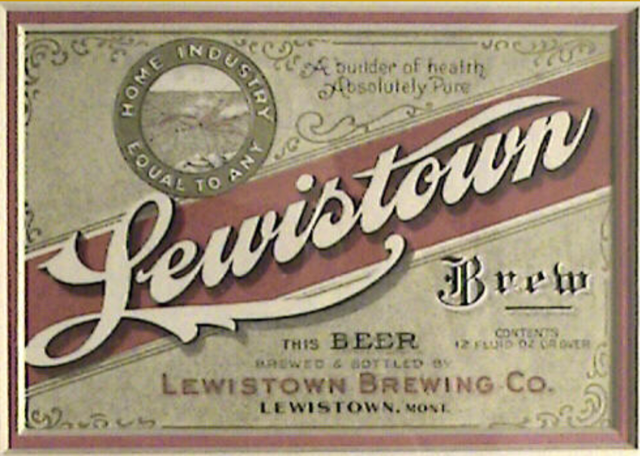
-My dad was the engineer at the Lewiston Brewery. My mother did the bookkeeping. Mr. Gus Hodel sold the brewery to my dad and three other employees. Soon after prohibition was enacted by Congress and that closed the brewery. I credit my living in Lewistown as a child, growing up in a small town, for helping me attain my ambition after graduating from Lincoln High School in Tacoma.
~~~~~
~~~~~~
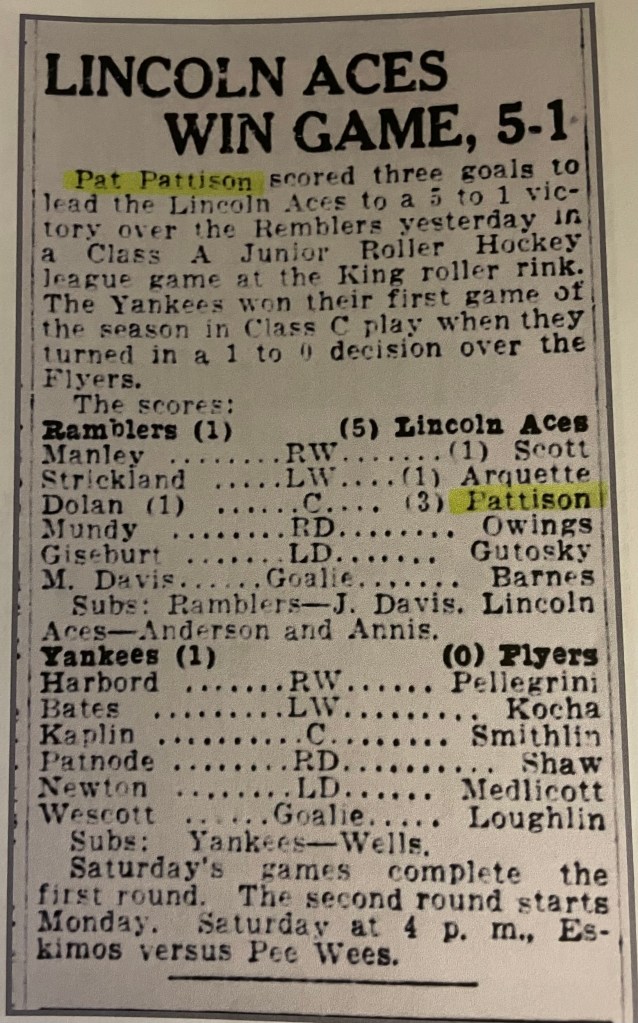
Pat Pattison Memories 1929-1946
I became interested in Roller Skating in 1929 when I moved to Tacoma Washington from Lewistown Montana. I was a die-hard ice skater There were five children in my family and we all learned to ice skate on the same pair of clamp-on skates. The first winter I spent in the great Northwest, the lakes froze over and we had two weeks of fun ice skating. Then the weather changed and that was the end of ice skating for the year.
A friend at Lincoln High School asked me what I liked to do. I told him about my ice skating experience and explained it was too far to go to Seattle Ice Arena. He then asked me if I had ever tried Roller Skating. I told him I didn’t even know there was a skating rink in town. My friend said he skated three times a week, had lots of fun, and invited me along.
My first trip to the Roller Skating Rink was spent mostly on the floor (sitting that is). I could ice skate circles around the other skaters at Spanaway Lake, but when it came to making the rollers do what the ice skates did, I was at a loss.
The roller skates were Richardson. The trucks were so loosely adjusted against the single rubber cushion, the trucks would wobble.
page 1
If you didn’t relax and stay over the center of the skates, you ended up on the floor.
The wheels on the skates were steel. If you had an extra quarter you could rent skates with aluminum wheels. There were two kinds of Aluminum wheels. The “Kennedy” was a wide wheel. The “Dvorak” was a narrow wheel. These wheels never needed truing up. Keep the gum scraped off and you had a smooth rolling wheel on the maple hardwood floor. The only trouble with the metal wheels was that the white maple floor became black with metal dust. Floor powder was used to keep the wheels from slipping. When the metal dust combined with the floor powder, it became a very dirty unsightly mess. (Why anyone even roller skated in those days is beyond comprehension). I would go to the rink wearing clean white or cream-colored cords and a white shirt. After two and a half hours, and a fall or two, I went home with black cords, ring around the collar, and a black and white handkerchief, from the metal dust on the black floor.
Mr. Herman King and his brother Tom were the operators of the Wintergarden Skating Rink. I spent most of my leisure time at the Wintergarden learning to skate forward, backward, turning, spread eagle, and the dances that were popular at the time.
There were no teachers of roller skating. We learned by watching and skating with a friend that knew the dances. They had races after “Men Only”. When I could keep up with the fastest skaters, I entered the races. Speed skating develops your balance and coordination faster than any other type of skating.
1931 rolled around and Herman and Tommy King decided to build a new roller skating rink in Tacoma. The rink was located at 27th and

page 2
Pacific Avenue. It was a concrete building with a skating surface of approximately 70’x123′. The floor was maple hardwood, installed in a log cabin design. Music to skate by was supplied by an antique mechanical band organ. I soon got to know the next song before it started. The organ used perforated paper rolls similar to those used on a player piano.
By 1932 I had become quite proficient in roller skating. Carl Arthur was the Tacoma City champion speed skater in the mile distance. Chuck Vidavik challenged him for the championship. I wanted to challenge him at the same time but was told by Mr. King I would have to wait and challenge the winner.
Aubry King, son of Tommy King, asked me to race him as an exhibition race prior to the championship race. I was a junior at Lincoln High. Aubry was 24 years old. He told me he would let me win because I was challenging the winner of the Tacoma Mile. As the date drew nearer, Aubrey showed me a newspaper clipping from Canada, saying that he was the “Canadian National Champion”. I knew he was a good speed skater, but never dreamed he was the Canadian National Champion. After reading the article I told him I wouldn’t race him. I didn’t want to get beat so bad that I would look like a beginner. He assured me he would let me win, so I consented to race him.
The speed track was laid out and the crowd was asked to take their seats around the rink and in the lobby. We had always raced in our street clothes, but this was going to be a special race. Aubry had two speed skating outfits. One was kelly green, the other navy blue. He gave me my choice, so being part Irish, I took the kelly green. He bought two dressing robes.
page 3
As we were getting dressed in our speed uniforms, Harry Bradburg and Lloyd Tenneyson prepared the track. The corners were powdered so we wouldn’t slip.
Mr. King introduced us as we skated to the center of the rink. Aubrey and I shook hands and while being introduced he told me that the first 13 laps we would make an exhibition out of it. He would let me pass him and then pass me a lap later. Then the final six laps we would make a race out of it. I felt like a dumb school kid that had been suckered into racing a 24-year-old man who was the Canadian National Champion. It was too late to back out, so after the introductions were over, we took off the dressing robes and started skating towards our friends, who were going to hold our robes. Well, I took off the robe o.k., but I failed to hold it off the floor. When my skates hit the robe I fell flat on my face. I was so embarrassed. The crowd was laughing and yelling. Here the race hadn’t even started and I was laying on the floor. It seemed like I was there for an hour. I finally managed to get up, red-faced and all, gathered the robe up so I wouldn’t repeat my performance, and proceeded to Aubrey’s sister Virginia to give her my robe. She gave me a word of encouragement and I went to the starting line.
Nineteen laps and I was shaking all over. All I could think of was that I would be chasing Aubrey King around the speed track for 19 laps, praying all the time he wouldn’t lap me too many times. Lloyd Tenneyson was the official starter, timer, lap counter, and referee. Lloyd told us to take the starting line and when we were set, he fired his starting pistol. The shock of hearing a starting gun for the first time must have scared the heck out of me because I hit the first corner pylon ahead of Aubrey. Aubrey had told me that we were to make lots of passes to make the race interesting for the spectators.
page 4
As I entered the corner I slid out so he could pass me, which he did. After a lap or two, I passed him. He didn’t slide out like I did for him, but I managed to get by him. This back-and-forth went on for 13 laps. Lloyd raised up 6 fingers, meaning 6 laps to go. 6 laps to go and I was in the lead. I figured he was letting me lead and could pass me any time he wanted to. As we skated another lap, Lloyd would decrease the number of fingers he was holding up. As each lap went by I knew Aubrey was going to pass me, and when we arrived at 1 lap to go I just knew he was going to pass me. The good Lord gave me the strength to put on the final push. Friends told me he was right behind me, then the final lap I pulled away from him. I won the race and he didn’t speak to me for a month.
Because it was my first big race I think it was the most thrilling one. I had won my first big race, which I had expected to lose, and had defeated the Canadian National Champion in doing so. Boy, did I feel good!
Before I could get away from all my friends who were congratulating me, they announced the Championship race. Carl Arthur, the Champion, and Chuck Videvik the challenger. I was so excited about winning my race that the only thing I remember is that Chuck defeated Carl to become the new 1932 Tacoma Champion.
Mr. King announced that I was challenging Chuck and the race would be held the following month. I was in 7th heaven. I could hardly wait to race again. I do remember one thing about the championship race. All the time they were on the track skating their hearts out, I wished it was me out there.
page 5
The following month it was my turn to try to win the Tacoma City Championship. Aubrey King loaned his speed uniforms to Chuck and me. All I can remember about this race was that I skated into a corner, and led the race for the entire mile. At last, I was a champion. No one ever challenged me to a race during the next four years.
Upon graduation from Lincoln High in 1933, I went to work for Pacific Refrigeration CO. I worked various jobs around the plant, and in 1934 I became the youngest engineer the company had. I took a correspondence course in refrigeration engineering to get some of the technical theory to go along with the on-the-job learning.
It was this job that treated me to skating in Portland, Oregon. I skated at the Oaks and Imperial skating rinks. Each winter when things slacked off in Tacoma and Kent they would transfer me to Portland. The Oaks Rink is the oldest rink in continuous operation in the world. Mr. Bolinger’s father started the rink and amusement park in 1905. The Oaks has one of the largest maple skating floors in the world. Mr. Chris Jeffries and Mrs. Lauterette operated the Imperial Rink. I spent most of my time at the Imperial. It was my home away from home. After skating in Portland that first winter, I came back to Tacoma and headed for Kings Roller Rink. The music was so bad, I decided to try to learn to dance. After a few lessons with my friend Guy Hickok Jr., I forgot about the pipe organ music in Portland and went back to skating where my friends were.
1936 rolled around and this year was a turning point in my life. Mr. Weston J Betts owned a grocery store in Redondo. He also owned
page 6
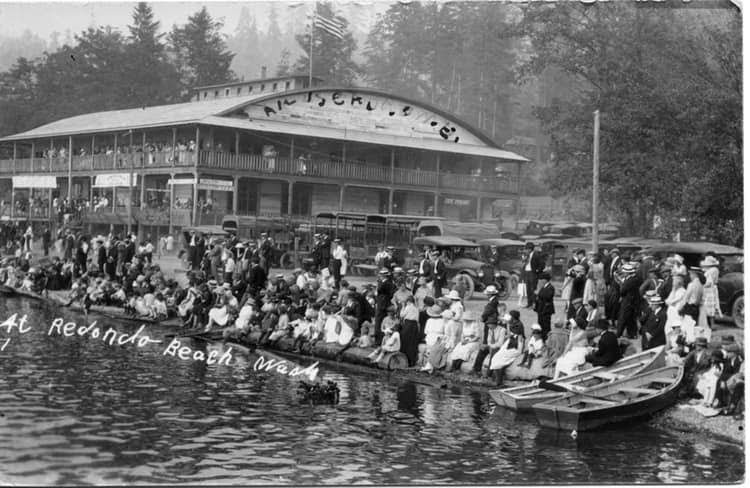
and operated a Picnic Park, Merry-go-Round, Ferris Wheel, and other rides. He also owned a building that he and his father Charles built in 1922 (the year Evelyn was born).
:format(jpeg):mode_rgb():quality(90)/discogs-images/A-2246641-1551995494-7450.jpeg.jpg)
Big-name bands played at Redondo, including Vic Meyers, who later became Lt. Governor of Washington. When Weston and his dad built the building it was three stories. The first floor was dressing rooms for swimmers. The second floor boasted four bowling alleys, pool tables, games, and other amusement devices. The third and top floor boasted a large maple dance floor.
After a season of dancing, they decided to lower the building, taking out the dressing rooms. They jacked up the building and removed the first floor. The building was built on a hill and the first floor was not entirely excavated. They had to dig out the remainder and haul the dirt out from under the building. They used a Model T Ford they fitted with a dump bed. When they drove out from under the building with their load of dirt and rocks, Mary Ella Betts (Evie’s grandmother) said it looked like a jackrabbit coming out of his whole. They succeeded in lowering the building, which resulted in making it a two-story building.
In 1935 a new dance hall was constructed in Midway on the new Highway 99. The new dance hall took most of the crowd that was dancing at Redondo.
One bright and sunny day, Weston Betts was cleaning the shelves under the cash register counter of his grocery store. While working on his many duties, he was always thinking. Today he was thinking of something he could do to get the dance hall operating again.
page 7
Ouch! he cried as he bumped his head while cleaning the shelves under the counter. He immediately thought of roller skating. While rubbing the sore spot on the back of his head, The wheels started turning. He had never roller skated in his life. Hadn’t even been in a rink.
After closing the store and having supper, Weston and his wife Lauree hustled their three children Evie, Byron, and Barbara into their Studebaker sedan and headed for Kings Rink in Tacoma. He had to learn more about roller skating.
Evelyn was 13 years old. During the first summer of operation, Evelyn sold tickets, checked coats, and sold soft drinks and candy. Aubrey King handed out the skates, played the mechanical organ, and managed the floor. This was to be a summer-operated rink along with Picnic Park. Evelyn did so good that first summer, Weston decided to keep the rink open on the weekends. The skaters kept coming so more nights were added. Soon there was skating every night except Monday and Tuesday which were reserved for private parties.
At the time the Redondo rink opened for business I was living next door to Kings. When I wasn’t working I was skating at King’s or the Imperial in Portland.
While skating at the Wintergarden Rink, I met Guy Hickok Jr. He was a very talented skater. He could watch someone do a spin or a trick on skates with a few tries to duplicate the spin or trick. Hickok was the only skater from Tacoma that went on to skate professionally on the stage. This was in the Vaudeville days of the ’30s and early ’40s. He toured the world with his partners. They performed their spinning act before the Crowned Heads of Europe and performed at
page 8
the Worlds Fair on Treasure Island in San Francisco Bay. The name of their act was “Happy Tom & Jerry”. When Vaudeville ceased, the act broke up.
In the summer of 1936, I found Redondo Skating Rink. Word got around that there was a new place to skate. I decided to try it. I drove the twelve miles to Redondo Beach. I walked up the stairs to the rink. On arriving at the top, my eyes focused on only one thing. Here at Redondo was the cutest little gal a guy would ever want to meet. Note: She was only 13 and I was over the hill at 21. I had to wait for her to grow up. Well, I didn’t have long to wait. We were engaged when she was 16 and married a year later.
I enjoyed skating at Redondo more than any place I had skated. The Betts family made everyone feel at home. ( To this day, 46 years later, people still talk about the atmosphere at Redondo and how Weston and Lauree Betts treated them)
There were two posts and a chimney on the main floor. Weston removed the chimney and did away with the fireplace on the first floor, where the Fun Palace was located. It had four bowling lanes, four pool tables, and numerous pinball games. A restaurant was operated by Hommer and Ruby Murray.
Next, the two posts were removed after the two trusses were strengthened. This gave us an area of 90’x130′ to skate in. Weston thought the rink was too square, so in 1937 he added 24′ on
page 9
the north end. Lauree’s father Arthur Burgess, was an excellent carpenter by trade. He helped in the construction.
Weston was always improving the rink. The rink had a balcony on the bayside and also on the south end. These were enclosed to accommodate a large spectator area and also a new skate room, check room, and snack bar.
By now word had spread around the Puget Sound area that Redondo was the place to skate. Many skaters from Seattle, Bremerton, Tacoma, and the Valley towns met at Redondo and became very good friends. (These friendships have lasted through the years).
Being the youngest refrigeration engineer in the company, I had to work a lot of nights. When I missed going to Redondo, there were always some friends from Portland or Seattle there that I would have liked to see.
It was about this time, 1937 that Mr. & Mrs. Keller and their twin daughters stopped off at Redondo on their way home from a trip back east. While in the east they had visited Mr. Fred Martin at his rink in Detroit. Mr. Martin had the idea that the roller skating rink operators should get together and form an association.
page 10
Seventeen gentlemen gathered in Detroit at Fred Martins Arena Gardens. To get the rink operators to come, championship races were to be run. The distances to be skated were 440 yds, 880 yds, 1 mile, 2 mile, and a 5 mile. At this meeting, the seventeen rink operators agreed to form an association to promote the test and competitive side of roller skating. Thus the R.S.R.O.A. was born.
Mr. Keller, from the Mello Moon Rink in Salem, Oregon thought this was great. On his way home from the east, he stopped at many rinks to encourage the owners to join. On arriving at Redondo, he didn’t have to talk very long. Weston filled out a membership application and sent it to Mr. Martin, the newly elected Secretary-Treasurer. The R.S.R.O.A.’s first office was a small drawer in Mr. Martins’s desk at the Arena Gardens. Mr. Keller asked Weston to contact other rink operators in Washington. Pop Brown was one of the first contacted. He joined the association and soon others followed, including Roger Adams of Tacoma and Silas Cook of Spokane.
Soon after the forming of the R.S.R.O.A., plans were being made to hold the first R.S.R.O.A. National Championships. The championships were awarded to Mr. Bill Sefferino and his brother Cap. They had opened a very modern new rink in Cincinnati, Ohio. Information was sent out to all member rinks that the Nationals were going to be held at Sefferino’s Rollerdrome.
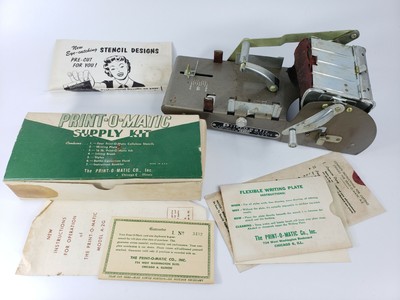
When Weston received this mimeographed information, he showed it to me and asked me if I would like to go. It took me a long time to make up my mind. It was so hard for me to make a decision. It took me at least 1 millionth of a second to say “Sure I’d like to go”.
page 11
Then a month later, after I already sent in my application to apply for the amateur card (cost .25 cents), we received another information sheet saying the National Championships would be open to Champion Speed Skaters only.
Upon receiving this information, Weston decided to have a Puget Sound Championship. The Puget Sound Rinks were notified. Only five applications were received. The Redondo Speed Club was the first-speed club west of the Mississippi River.
The winner of each race was awarded 30 points, 2nd place 20 points, and 3rd place 10 points. Weston was the meet director and set up the races. The first race was to be the 1-mile distance. The five entrants reported to the starting line. Weston fired the starting gun. At the first corner, I was in the lead. I don’t know who was in back of me as I was too excited to look back. Here I was on the way to race in the first R.S.R.O.A Nationals.
Well after a couple of laps, I slipped and fell. It didn’t take me very long to get up, but all four skaters passed me. All I could think of was, here I had sent in my application and I couldn’t even stand up and win the first race.
It took me several laps before I had regained the lead. I no more had passed Jimmy Clifton going into the same corner I had fallen on before when I slipped again and fell down. I was in shock by now. All my friends and Evelyn were cheering me on and I couldn’t even stand up. This time only Jimmy and George passed me.
I jumped to my skates and took after them. After 3 or 4 laps I passed George and then a lap later I passed Jimmy. Every time I skated around the corner I fell on twice, I was very careful not to start
page 12
sprinting again. As the race progressed, I gradually increased my lead over 2nd place.
Boy was I smiling when I passed over the finish line. I thought my hope of attending the first Nationals was. gone when I fell, but on winning the race I was glad I hadn’t quit. After the race, I was told, a little kid wet his pants and that was the spot I kept hitting.
A half-hour later, we raced the quarter-mile distance. More powder was sprinkled on the track, especially the slick spot. I won this quarter-mile. That gave me 60 points. Jimmy Clifton had 40 points and George had 20 points.
The next race was the 2-mile distance. I don’t think any of the skaters had ever raced a 2 mile before. George Anderson came up to me before the race and informed me, this was a longer race and I would not be able to skate fast. I lapped him 3 times and Jimmy twice. I won my third race with no falls. This gave me 90 points toward the Championships. But Jimmy had 60 points and if he won the 880 yrd. race and I didn’t place, we would be tied in points. I made sure I didn’t fall and I won the 880.
The final race was the 5 mile. This race is one of the most exciting because a sprinter doesn’t always win the long race. George again reminded me that this race was longer and I wouldn’t be lapping them this time. I tried to skate the 5 miles as fast a pace as I had the other races. I wanted to win so bad I never had the feeling of getting tired. I lapped second place seven times. This made me the Puget Sound Champion in all 5 distances. It made me feel good to defeat the Tacoma “Champ” Jimmy Clifton because they had refused to let me race him, as I was no longer a resident of Tacoma.
page 13
I had earned my right to enter the first R.S.R.O.A. Nationals. All other contestants were east of the Mississippi River except for two skaters from Ogden, Utah. Every Newspaper in the Valley, Tacoma, and Seattle carried my picture and article about me.
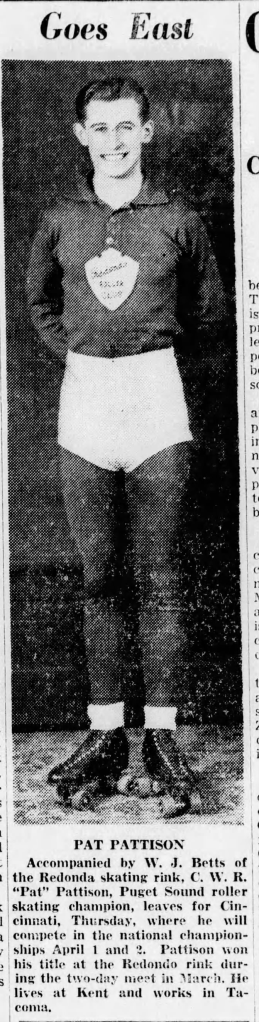
My fellow employees at the Pacific Refrigerating Co. in Tacoma took up a collection and bought me a new pair of Richardson skates. I mounted the skates on a new pair of bowling shoes. I had a shoemaker remake them to support the skate. Toe stops were unheard of and everyone started flat foot and duck walked to start each race. We purchased some wood wheels for the races. They were lighter and held the floor better than the metal wheels.
There was no one teaching any kind of skating up to this time, so Weston became my “coach.” We boarded the train at the Tacoma Union Station. Trains and buses were the main modes of travel. Skaters from all over the Puget Sound area gave us a big farewell and we were on our way to Cincinnati, Ohio. Every time the train stopped, Weston would have me out of the train, running to keep my legs in shape for the big event.
On arriving in Cincinnati, we took a taxi to Sefferino’s Rollerdrom. It was a new, larger than the Redondo Rink. The floor was very clean. Looked like they had just sanded it. Weston was so impressed, he sought out Bill Sefferino to compliment him on the newly sanded floor. Bill told him they hadn’t sanded the floor for over a year. Weston couldn’t believe him, Then Bill asked him, “What kind of
page 14
wheels do you use?”Weston answered Bill with “Metal, Steel, and Aluminum.” Bill took us over to his skateroom and showed us the fiber and wood wheels on his rental skates. Weston decided then and there that he was going to change his over when we got home.
I had a great in Cincinnati. I met many rink operators. Many were the founders of the R.S.R.O.A. There were 39 Senior Men entered in the meet and 16 Senior Ladies. Heats were run in all distances except the 5-mile distance. All 39 entered this one.
In my first race, I was tripped and when I fell I broke a wheel. They didn’t have any Richardson wheels so I had to use a Chicago wheel and grind the rest of mine down to match. The first three qualified for the finals. I was always fourth. When the 5 miles came up on the 2nd day of the meet, I thought I might be able to place in his one. With thirty-nine Senior Men on the line, I ended up out in the center of the rink. I decided to go back and start a 2nd line in a spot about 3rd from the rail. This gave me a more direct route to the #1 corner. When the race started, it was like a bunch of sheep trying to get out of the gate at the same time. Lucky for me a point was formed and I was near the point. Many skaters fell going into the first corner. I made it through and ended up in sixth place going down the other side of the rink. After a few laps, I managed to move up to fourth place. I thought this was a pretty good place to stay till the last mile. Just as I was going to move up to third, another skater decided to move up also. He went by me and as he passed me he fell in front of
page 15
me. I jumped over him but by the time I regained my balance, four skaters had passed me. It took the last half mile of the race to pass them and get back into fourth place again. The race ended and I finished 4th again. I wanted to win at least one race for all my friends at home. They had sent me telegrams wishing me luck etc. It just wasn’t to be. The local paper had called me the “Glen Cunningham” of the West. (Glen was the Champion track star of the 1930s).
My most embarrassing moment in my life occurred during this meet. I fell on one race and when I sat on the floor, my white trunks split in the crotch. (My sisters Edith and Shirley made them for me). The back was flapping in the breeze as I skated around the track, unknown to me. After the race, I was told by a friend and I headed for the restroom to get my spare trunks. I was in such a hurry I entered the wrong one and ended up in the lady’s restroom. They screamed and I retreated out. All the spectators in this area noted my error when the girls screamed. They let me have it when I emerged. Boy was my face red.
When the championships ended, Fred Martin and Victor J. Brown presented the winners with their metals. Everyone cheered when George Moore and Vivian Bell, both of Cincinnati were awarded Gold medals. They were the first R.S.R.O.A. Champions.
The Skate Club of Cincinnati bought a larger silver cup to be awarded to the skater showing the most sportsmanship conduct during the meet. When Bill Sefferino announced that they had decided on “Pat Pattison” from Redondo, Washington, I couldn’t believe it. My friends were trying to help me down out of the bleacher seats to get the trophy. I fell through to the floor and crawled out. I was so
page 16
shook up everyone laughed because I was so excited. Then they cheered so loud I was so excited. Then they cheered so loud I couldn’t hear Fred Martin, Vic Bown, Bill, and Cap Sefferino congratulate me. I thought to myself “This is better than winning the championship.”
Note: I lost this trophy when Redondo Skating Arena was destroyed by fire, in January 1951. Christmas 1980, Mike and Bobbie ordered a similar trophy, had it engraved, and gave it to me when we had our family get-together at Ben and Bobbie’s home on the Little Spokane River in Spokane. I will always remember this Christmas as one of my best. Needless to say, I shed a few tears when I took the trophy out of the box. They sure kept it a secret. I had no idea but wondered why my children, wife, and grandchildren had their cameras focused on me while I opened my gift. Thanks a million, Mike and Bobbie.
After the championships were over, They had a short program. “Cooney” Umback and his wife demonstrated some of the dance steps they did in Cincinnati. Weston told them I did a lot of tricks, so they asked me to do an exhibition. When I was in school I couldn’t get up in front of any group and talk, but with my skates on I figured I could do anything. To my knowledge, this was the first freestyle ever skated at a National Championship. I did every trick I knew.
The next day Perry Rawson conducted a class on the International style of dancing. He asked the Keller twins from Salem, Oregon, and me if we would like to stay over. He proceeded to teach us the 14 step. After a few steps, I recognized it as a dance Betty Lytle taught me at the Portland Ice Arena a couple years before. Perry was surprised I knew the 14 step. He told me to teach one of the Keller twins and he would teach the other. After three or four records we
page 17
were skating around the rink to march music. This was the first time International style dancing was done on rollers.
Note: Perry Rawson was a retired millionaire. His home was in Asbury Park, New Jersey where he had his own private roller skating rink. The skaters of America owe a lot to Perry B. Rawson, who I will call the Father of modern-day dancing on roller skates in America.
Fred Martin told Weston it was time to leave, so I thanked Perry for his help and left for Detroit. I was to pick up my new 1938 at the Ford Factory. Fred invited Weston and me to ride to Detroit with him. On the way, we stopped at Belle Skating Rink in Fort Wayne Indiana.
Then onto Dayton Ohio where we met Fred Bergin at his Skateland Rink. Fred asked me if I would skate an exhibition for his skaters. I think it was Saturday evening. There was a large crowd in attendance. I did my number to music picked out by Mr. Bergin. He was an organist and had watched me in Cincinnati. It was more fun skating it to music. The crowd let me know they liked it and I left Skateland with a big smile.
We arrived late that night in Detroit. Weston and I stayed with Fred Martin and his family. Weston and I toured the Ford plant and at the end of the tour, they had my new Ford waiting for me. I not only received a swell trophy on this trip but a new car as well.
We headed for Chicago: Here it was the 7th of April. Spring was here. Don’t you believe it? When we arrived in Chicago, They were having a blizzard that turned out to be the worst snowstorm they had in years.
We visited the Madison Street Rink and the Armory Rink. The rink is the largest I ever skated in. 150′ wide x 350′ long. The Floor Guards
page 18
were all in black tuxes. They were huge adults. No one ever got out of line. After the Chicago blizzard, we had better weather on the way home. We stayed over in Denver and went to a rink in downtown Denver, owned by Carl Johnson. He announced that I was on my way home from Nationals. Weston gave the kids stickers from Redondo. (They have some of these in the museum at Lincoln, Nebraska). The skaters wanted me to autograph them. Here I was on my hands and knees in the center of the rink autographing stickers for the Denver skaters. I was beginning to feel like a movie star.
Our next stop was a rink in Salt Lake City where we met Mr. Gordan Wooley.
Then we arrived back in Redondo. Boy, it was good to be home again. Everyone congratulated me on my being presented with the “Most Outstanding Sportsman Trophy”. Lauree gave me a big hug and a kiss. Then it was Evie’s turn. I decided then that if she would have me I’d ask her to marry me. I didn’t think I had a chance. I was eight years older than her. To my surprise, she said yes. She was too young to know any better. Her mom and dad said we had to wait till she graduated. She was a junior at Federal Way High School.
It happened in the winter of 1938-1939. I had been transferred to Portland to work. Weston brought Evie down to see me. Mr.Pool, one of Evie’s teachers, came along on the trip. When they got to Portland, Evie talked Mr. Pool into going someplace with her dad. This left Evie and me to go up on the west hill overlooking Portland. It was here on a secluded spot overlooking the lights from the city of Portland that I asked Evie to marry me. She said yes, but don’t tell Dad until I get home and tell Mom.
page 19
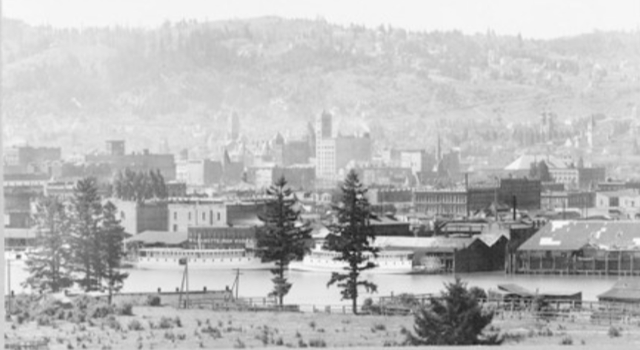
After Nationals in 1938 skating started to change. The rinks were getting organs, both pipe and electronic. Redondo bought a Hammond organ. Lauree was Redondo’s first organist. Betty Shelton followed.
Weston heard that Betty Lytel was to make a tour. Betty was the first International Dance skater to appear at Redondo. Since I had known her for several years it was very easy to skate with her. The first afternoon she taught me the Keats Fox Trot, Flirtation Waltz, and the Harris Tango. That evening we skated our first exhibition. I was very glad she knew the dances. It was so easy to follow her. We ended the exhibition with several pairs movements. The following day I practiced on the three dances Betty had taught me. That evening I skated more relaxed, as I knew the dances a lot better.
I had been practicing figure skating for about a year. Betty was a qualified judge. Permission was granted for her to judge me on the first four tests. Betty was the only skater at the time to have passed all five tests. Herb Hemlow operator of the Rollerdrome in Seattle was asked to judge. I passed all four tests. Redondo was becoming the skating capital of the Northwest.
Our next venture was a skating show. Dottie Shores (One of Evie’s best friends), Al Brand, and Nick Zittel did a comedy number, and Maxine and Goodryn did a Top Hat and Cane number. Evie skated with me. We did a combination of tangos. We wore Spanish costumes, and previously I had loaned my suspenders to Russ Kennedy. Russ skated a freestyle number. When he finished his number he forgot to return my suspenders. When
pg. 20
Evie and I crossed on the first steps of the Harris Tango, my trousers lowered to the floor and tripped me. I was so embarrassed I wanted to hide behind the stage. We started over again and as soon as I bent my knee in preparation for the cross behind, I fell again. By this time the audience thought it was a comedy number. Everyone started laughing. I started laughing and could hardly get up. Now I knew what the trouble so every so often I would reach down and pull up my trousers. Some of the ice judges were present. Every time I went by Phil Girton, he would whistle and I would reach down and pull up my pants. The show was a big success.
1940 rolled around and the Nationals were scheduled for April 2 and 3rd at the Cleveland, Ohio Auditorium. I had turned pro after Nationals in 1938 and wanted to see the Nationals again.
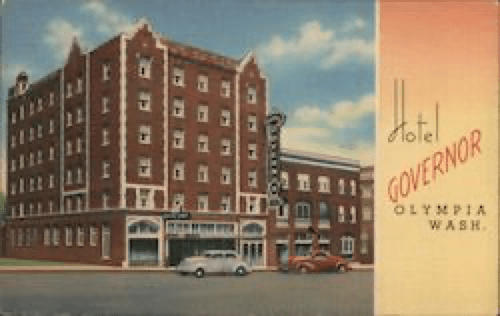
Evie was to graduate at the end of May. She talked her mom and dad into letting us get married March 5th so we could go to Cleveland on our honeymoon. They gave their approval after much debate. Plans were made and we were married in Kent at the Methodist Church. Paul Sherry was my best man. Paul and his friend John Augustable placed a dead fish on the manifold of my car. I had left it in Paul’s garage for safekeeping. After the ceremony and reception were over, Paul took us to his house. We transferred to our car and were on our way. We got as far as Olympia. We stayed in the honeymoon suite of the Governor Hotel (No fishy smell on the way. The dead fish, instead of frying on the manifold, fell off). The next day we went on to Portland, revisited
page 21
our spot on the West Hill., and skated at the Imperial and Oaks Rinks. We then decided to go home because our real honeymoon was coming up soon. When we arrived back in Redondo, Paul Sherry couldn’t wait to see us. Since the fish had fallen off and there was no smell, we knew nothing of it. He finally asked us if there was a foul smell in the car. When we told him no, he thought we were lying, but we finally convinced him.
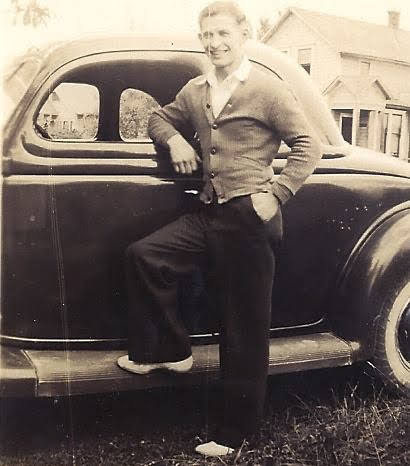
Pat with his 1938 Ford
My Great Uncle on my mother’s side married Senator La Follette’s sister. My Great Uncle was Cheif Justice of the Supreme Court of Wisconsin. Senator La Follette ran for President on the Progressive ticket in 1924. He received more of the popular vote than any independent candidate had up to this point in time. He was also voted as one of the ten best Senators this country had. **Both Senator La Follette and Chief Justice Siebecker will have their own page in the future**
page 22
From Washington DC, we traveled to Victor J Brown’s New Dreamland rink in Elizabeth, New Jersey. It was very large 120’x250′. My good friend Betty Lytle was head pro. While there Betty taught Evie and me the Quickstep. The rink was so large you could skate the dance at a very fast pace.

We then motored on to Earl VanHorns Rink on Long Island. This was our first time in New York. Mineola Skating Rink was quite long and narrow. Earl insisted that Evie and I be his house guests. It was here on April 9, 1940, that Evie and I took our Bronze Medal Dance Test. They didn’t tell me my timing left something to be desired, but we passed.
We finally left New York and traveled to Niagra Falls. This was the “Honeymoon” spot in the nation. It was spectacular.
From Niagra Falls, we headed north to Toronto, Canada. That evening we traveled to one of the most famous rinks of the 1940s, Fred Martin’s Arena Gardens. It was a huge rink. It had a large Wurlitzer pipe organ. Bob Martin, Fred’s son, was teaching the Tango to a large class of skaters. As Evie and I stood there at the end of the skating floor, Bob Martin had the organist play several bars of Tango music. Bob counted the beats out to his class. This was my introduction to music as it applied to skate dancing. Evie and I decided to take our Silver Medal Dance test. This time we kept time to the music and had no trouble passing the test.
We said goodbye to all our newfound friends and headed for home. When we got home we had fifty cents left. We learned a lot about skating on this trip, made a lot of friends, visited many rinks, and came home to make Redondo Skating Arena #1 in the west.
page 23

Another year passed and on March 3rd, 1941 our first child was born. Boy was I scared. Especially when they showed me our baby for the first time. She had lots of black hair and was red as a beet. I thought she was very cute with that curl on the top of her head. Evelyn’s middle name is Carol, and my first name is Carroll, so now you know why our first child was named Carole.
Max Kluth lived directly behind the Redondo Skating Arena. He was a machinist by trade. Evie’s mom bought the smallest baby shoes with a hard sole, that she could find. She took them to Max and asked him to cut down a pair of Chicagoskates to fit the shoes. He did a splendid job. Lauree gift-wrapped them and took them to the Tacoma General Hospital to give to Evie and Carole. Boy, was Evie surprised. The nurses took them all over the hospital, showing them to patients and telling them that Carole had a pair of skates already.

page 24
and tell me Jimmy got one too. He was always two grades ahead of me. I worked hard and ended up a Captain on flying status. I received a letter of commendation from General Davidson and the Commanding General of the 10th Air Force for my work in Burma.

(Grandpa Pat always had his signed Jimmy Stewart picture on his side table. -Heather)
I had a crew of seven men and it was my job to direct fighter bombers to targets that the artillery could not knock out.
In September 1945, I was honorably discharged from the service. I came home to Redondo to start teaching and managing the Redondo Skating Arena.
In 1946 Weston added 70 feet on the south end of the building. Weston bought the finest wool carpet available and installed it in the outer and inner lobby. To my knowledge, this is the first time carpet was used inside a rink where skaters could skate on it. He was so proud of his rink. I asked him if he wasn’t afraid the skaters would wear it out? He replied, “If they wear it out I’ll replace it.” He also bought a large theater pipe organ to install in the rink. It was a 19-set Wurlitzer pipe organ. Shorty Oliver was the organist and many times he would play “Stardust” for me when I was skating with Evie.
On March 3, 1946, our daughter Barbara Lauree blessed us. Now I had twins. Five years apart, Barbara just made it on Carole’s birthday. She was born just a few minutes before the clock struck midnight, Now we have two very pretty girls.
page 25
More to come…
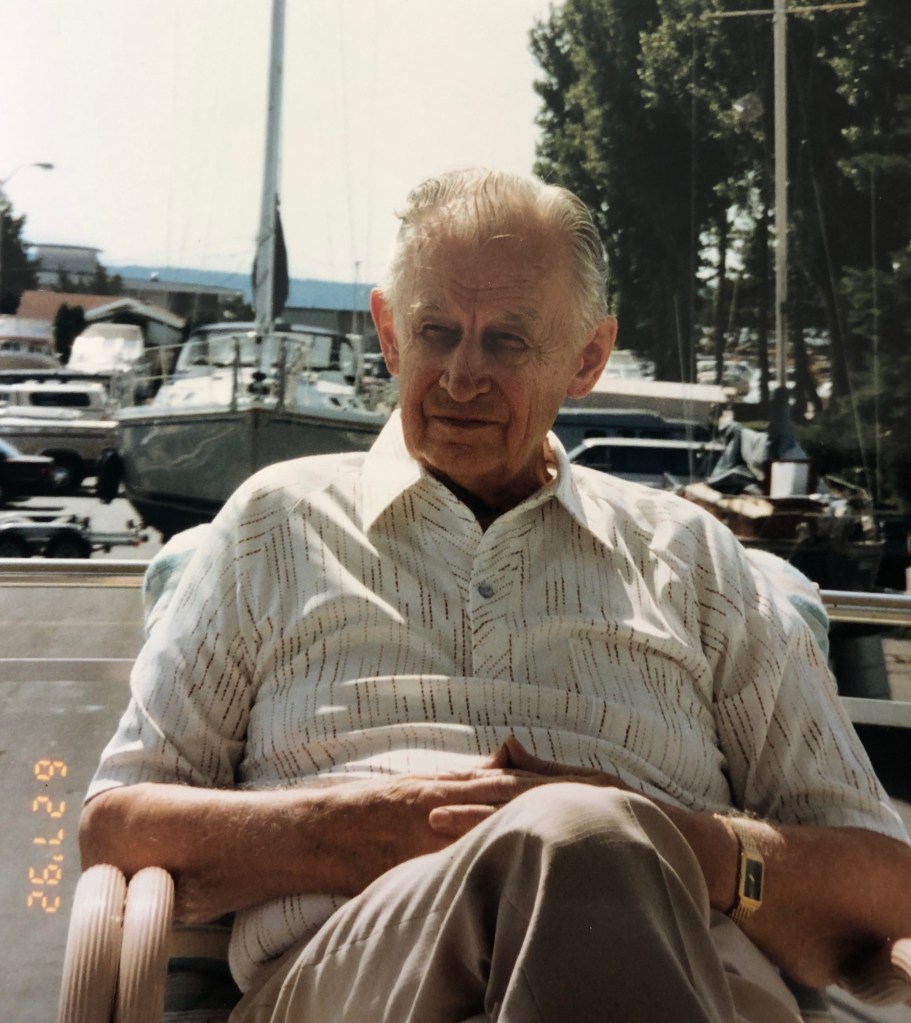
Man, I miss him!
(1-2) Certificate Of Birth. (3–11) Story told in Pat’s own words. (12)Pat’s memories from growing up in Lewistown Montana
 If the Genes Fit...